
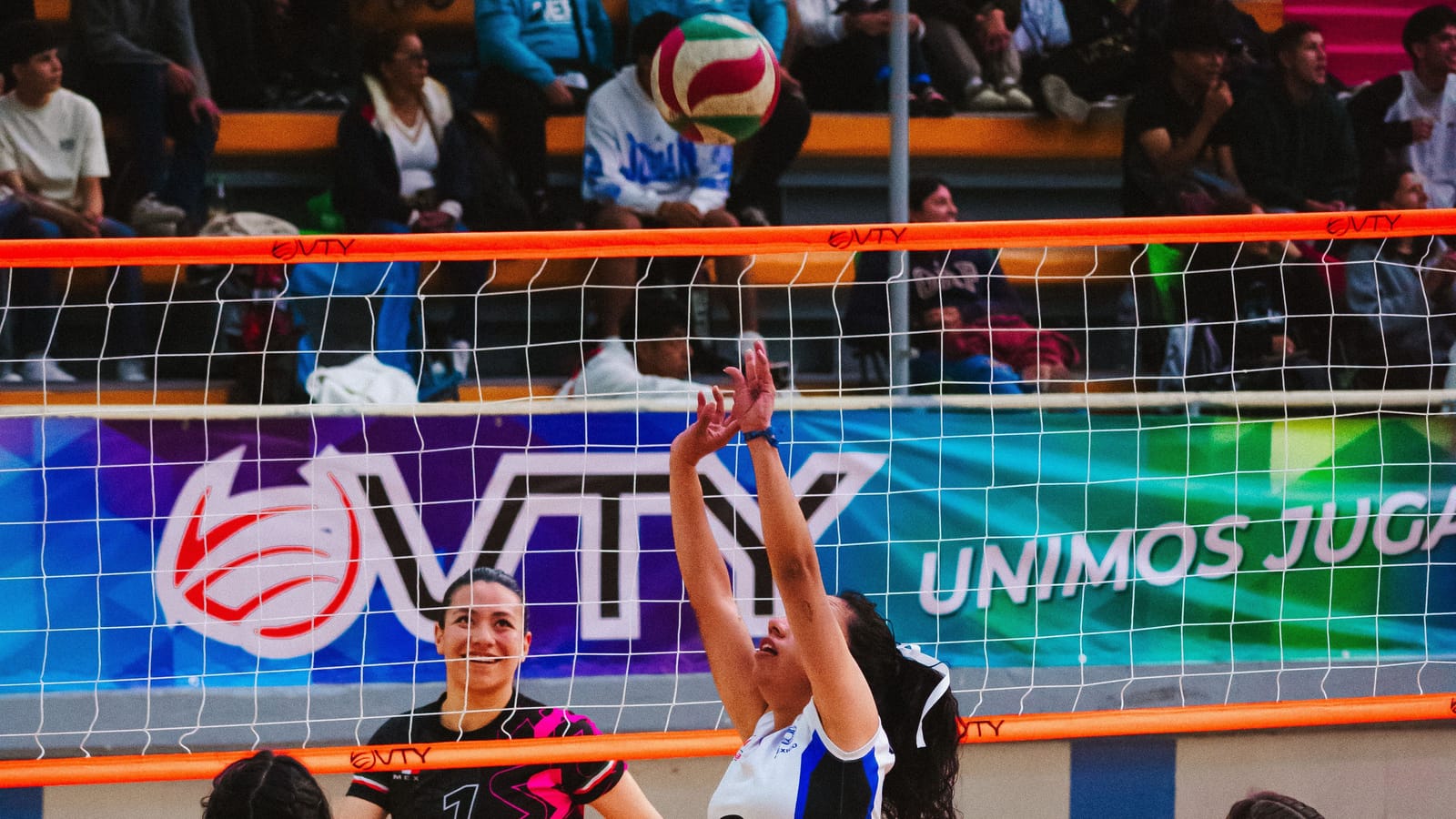
Volleyball Blocking Drills for Middles and Outsides
Blocking is the one skill in volleyball where doing less, staying patient, reading the play, staying square, usually produces more results. These volleyball blocking drills are organized to build that discipline from the ground up, starting with footwork and finishing with full team transition.
Footwork First: Shuffle vs. Three-Step Crossover
Before any drill makes sense, your players need to understand why they're moving the way they're moving.
Shuffle is the default movement for short distances (one to two steps). Shoulders stay square to the net, hands stay above shoulder height, and the blocker can stop and jump without a wind-up. Use it for middles closing short or outside blockers adjusting to a set that's not perfectly on the antenna.
Three-step crossover covers larger distances: crossover step, run step, close-and-square. It's faster over distance but requires time to stop and square before the jump. Middles use the crossover to get from the middle of the net to the pin. The mistake most middles make is arriving still moving, they need to plant the outside foot and square their hips before they leave the ground.
One principle applies to both: hands above shoulders the entire trip. Dropping hands to gain speed is the most common footwork error you'll see.
Timing: Jump After the Arm, Not Before
Beginners jump when they see the hitter jump. That's too early, they're already coming down when the ball is struck. Teach your players to watch the hitter's elbow: jump just after the hitter's arm starts forward. This keeps the blocker's hands at peak height when contact happens.
A helpful cue: "Wait, wait, then go." The same cue used for high-ball hitting (see volleyball hitting efficiency explained) applies to the blocker on the other side of the net.
Hand Penetration: Press Over, Thumbs Up
Once in the air, the blocker's job is to put hands over the net and into the hitter's space, not to wave arms and hope. Cue your players to press hands over the net, thumbs pointing up: fingers spread wide. This posture channels the ball down into the opponent's court rather than letting it ricochet off the backs of the hands at an uncontrolled angle. A collapsed wrist or a downward-angled hand turns a good jump into a wasted one.
Read Blocking vs. Commit Blocking
Read blocking means the blocker watches the pass, then the setter's hands, then the hitter, and reacts to where the ball actually goes. It's slower to commit but protects against misdirection. Middles should default to read blocking, their job is to be in the right place at contact, not to guess and sprint.
Commit blocking means the blocker picks a hitter before the setter touches the ball and moves immediately. It generates early, sharp angles against predictable offenses, but a good setter will eat a commit blocker alive with a back set. Reserve commit blocking for teams that run quick-heavy offenses against middles who have the speed to get there, and only when your read data backs up that the setter goes quick most of the time.
The Six Drills
1. Block Footwork Along the Net
4 players, 10 minutes, Beginner (12U+)
Players work in pairs along the net. One player leads with lateral movement; the other mirrors and matches, keeping hands above shoulders throughout. Switch directions on a whistle.
Coaching point: Hands above shoulders the whole trip; square shoulders at landing.
Watch: Block Footwork Along the Net
2. Mirror Blocking
2 players, 10 minutes, Beginner (12U+)
One player leads (on a box or on the ground), one mirrors. The leader moves laterally and the blocker matches. The leader uses head fakes and shoulder jabs.
Coaching point: React off the leader's hips, not head fakes. Hips don't lie; heads do.
3. Box Blocking
3 players, 15 minutes, Intermediate (14U+)
A coach or player hits repeatable balls from a box to a blocker's hands. The blocker works timing and hand penetration. Rotate roles every few reps.
Coaching point: Jump just after the hitter's arm starts forward; spread fingers, thumbs up.
4. Read the Setter Blocking
8 players, 15 minutes, Advanced (16U+)
Run a live serve-receive rep: passer, setter, hitters, and a front row of blockers. Blockers must call the set before their feet commit. Coach scores correct reads vs. missed reads.
Coaching point: Eyes follow: pass quality, then the setter's hands, then the hitter. Middles who skip the first two steps are guessing, not reading.
Watch: Read the Setter Blocking
5. Double-Block Closing
4 players, 15 minutes, Intermediate (14U+)
Middle starts at center, outside starts at the pin. Coach tosses to a hitter at zone 4. The middle closes to form a two-person block. Work both pins.
Coaching point: No seam: the middle's outside hand touches the pin blocker's inside hand in the air. A gap in the block is an invitation to hit straight down the seam.
6. Block-to-Defense Transition
6 players, 15 minutes, Advanced (16U+)
Live blocking reps, but after every jump, stuff block or not, the blocker must land, turn, and locate the next ball. Defenders behind them are actively in play. Reward reps where a blocker lands in ready position.
Coaching point: Land looking for the next ball, not admiring the block. The rally doesn't end because the blocker did their job.
Watch: Block-to-Defense Transition
Position-Specific Notes
Middles are on the block every rally. Their blocking workload is heavier and more central than any other position, which means raw block counts across positions look uneven by design, a middle who closes six times in a set isn't comparable to an outside who blocks twice. If you track stats, tools that account for position context (rather than ranking everyone on the same scale) give you a fairer picture of who's actually working at the net. At 18U, a solid middle averages around 2.0 blocks per match; an elite one reaches 3.5. That's the benchmark to chase.
Read blocking is the middle's primary mode. Their priority sequence, as covered in best volleyball drills for every position, is footwork first, quick attack timing second, and reading the setter third.
Outside and right-side blockers deal with the opponent's best hitters, often without a middle arriving in time. They must hold position on the line, stay patient on the arm swing, and be prepared to single-block when the middle doesn't close. Right-side blockers in particular need to be comfortable blocking zone 2 sets, which come at a different angle than the typical outside attack. Mirror Blocking and Double-Block Closing are especially valuable for pin blockers learning to hold the line and create a clean seam with the middle.
Putting It Together
Blocking doesn't get better in ten minutes. The footwork, timing, and hand discipline compound over weeks of reps. Start with Block Footwork Along the Net and Mirror Blocking early in the season, progress to Box Blocking and Double-Block Closing through mid-season, and run Read the Setter Blocking and Block-to-Defense Transition once your players can physically execute the basics without thinking about them. That sequencing is more important than any single drill.
Related reading
- Best Volleyball Drills for Every PositionA position-by-position drill guide so every player on your roster gets reps that match what their role actually demands in a match.
- Volleyball Serve Receive Drills for Youth TeamsTen targeted passing drills volleyball coaches can use with 12U-16U athletes, complete with player counts, times, and a simple 0-3 grading system.
- Volleyball Hitting Efficiency: What It Means and How to Improve ItHitting efficiency is the single number that separates smart attackers from hard swingers, here is what it measures and how to raise it.